
The true cost of uninsured packages extends far beyond the price of the item itself, encompassing lost shipping fees, replacement expenses, and the potential for permanent customer churn. Although insurance generally costs as little as 1.25 percent of a shipment's declared value, a single unprotected loss forces a business to absorb the full financial impact of damage or theft. By choosing coverage, merchants protect their bottom line against the billions of dollars in lost goods reported annually across global shipping carriers.
Every e-commerce leader eventually faces the sinking feeling of a high value shipment disappearing in transit. While the immediate loss of physical inventory is frustrating, it represents only the visible tip of a much larger financial drain. Many businesses focus exclusively on the cost of goods sold; however, the true expense encompasses customer service labor, expedited re-shipping fees, and the long term erosion of brand loyalty. This is the iceberg effect of shipping loss, where hidden variables can silently compromise your profit margins. In this article, we will break down the direct financial math of lost packages and explain why standard carrier liability often leaves your bottom line exposed. You will also discover how modern insurance technology and API integration can transform your claims process into a strategic advantage.
The Iceberg Effect: Understanding the Visible and Hidden Costs of Shipping Loss
Statistically, between 1% and 5% of all e-commerce shipments fail to reach their destination in perfect condition. While a 3% loss rate might seem like a manageable line item on a spreadsheet, it represents the Iceberg Effect of logistics. The visible tip of this iceberg is the replacement value of the physical product; however, the true cost of uninsured packages lies deep beneath the surface, where hidden expenses quickly erode profit margins.
When a package vanishes or arrives shattered, the immediate financial hit is only the beginning. Below the water line, businesses must account for the administrative labor required to investigate the claim, the non-refundable shipping fees paid to the carrier, and the sunk marketing dollars spent to acquire that customer in the first place. Customer acquisition costs are rising across every industry. Losing a buyer due to a failed delivery means those initial advertising expenditures were essentially wasted.
For a San Jose based business or any high-volume global shipper, these submerged costs accumulate rapidly. Handling these issues manually without a strategic partner creates an operational bottleneck that drains internal resources. Utilizing discounted package insurance allows companies to mitigate these risks without the high premiums typically charged by standard carriers. By leveraging an expedited claims process and 24/7 digital access, businesses can recover their capital faster and refocus their team on growth rather than damage control. Understanding that a lost package costs far more than its invoice price is the first step in building a resilient, tech-forward shipping strategy.
The Immediate Math: Calculating the Direct Financial Hit

To visualize the direct financial hit, consider a retail business shipping a $500 smartphone. If that package is lost or stolen and remains uninsured, the math extends far beyond the $500 price tag. A typical cost of uninsured packages calculator must account for several distinct layers of loss. First, the business loses the Cost of Goods Sold (COGS), which, at a standard margin, might be $300. Second, the initial shipping fee of $20 is a sunk cost that cannot be recovered from the carrier.
To fulfill the original order, the business must then ship a replacement unit. This requires another $300 in inventory and a second $20 shipping label. In this scenario, a single $500 sale has resulted in $640 of direct expenses, completely erasing the profit from this transaction and several others.
Expense Category | Uninsured Loss Breakdown ($500 Item) |
|---|---|
Lost Product (COGS) | $300.00 |
Initial Outbound Shipping | $20.00 |
Replacement Product (COGS) | $300.00 |
Replacement Shipping Label | $20.00 |
Total Direct Financial Hit | $640.00 |
Many shippers attempt to mitigate this by purchasing coverage directly through the carrier at the point of sale. However, carrier rates are often prohibitively expensive for high-volume businesses. For example, USPS charges approximately $2.70 for just the first $100 of coverage, with fees scaling upward significantly for higher values. Protecting a $500 or $1,000 shipment through a carrier can quickly cost $10 to $15 per box.
By contrast, leveraging discounted package insurance through a third party allows businesses to secure the same $500 shipment for a fraction of that price, often saving up to 90%. This shift in strategy transforms a massive potential loss into a predictable, minor operating expense. When these claims do occur, an expedited claims process ensures that the $640 hit is minimized through rapid reimbursement, maintaining the business's cash flow without the long wait times associated with standard carrier investigations.
The Reputation Tax: How Damaged Goods Destroy Brand Loyalty
The math of a single lost box is sobering, but it fails to account for the Reputation Tax levied against your brand. In a competitive ecommerce landscape, delivery is the final and often most critical touchpoint of the customer experience. Industry data reveals that 85% of consumers believe a damaged delivery negatively impacts their perception of a brand, while 51% are unlikely to repurchase from a company after a single damaged or failed delivery.
When you factor in that it costs between 5 and 25 times more to acquire a new customer than to retain an existing one, the true cost of uninsured packages becomes an existential threat to long term growth. If a package is lost and you lack a streamlined recovery method, the resulting friction often leads to the permanent loss of that customer’s Lifetime Value (LTV). A shopper who might have spent thousands of dollars over the next several years will instead migrate to a competitor because their one shipment vanished into a logistical void without a quick resolution.
A slow or non-existent claim process compounds this brand damage. Without the support of an expedited claims process, businesses often delay replacements while attempting to navigate carrier hurdles. This delay is perceived by the customer as a lack of accountability. By utilizing discounted package insurance, you ensure that your customer service team has the financial liquidity to resolve issues immediately. Protecting the shipment is about more than just the inventory; it is a strategic move to protect the marketing dollars and effort already spent to earn that customer's trust.
The Carrier Liability Trap: Declared Value vs. Real Insurance
Protecting your brand’s reputation requires a clear understanding of the technical safety nets available. Many shippers mistakenly believe that declared value and shipping insurance are interchangeable terms; however, this confusion often leads to unpaid claims. Declared value is simply a statement of the carrier’s maximum financial liability if they are proven negligent. It is not an insurance policy. This distinction is the primary reason many claims are denied. When a business relies solely on carrier liability, they are subject to strict insufficient packaging clauses. These clauses give carriers broad discretion to reject a claim by arguing the box was not taped correctly or the internal cushioning did not meet a proprietary standard, even if the damage occurred during heavy transit mishandling.
Feature | Carrier Declared Value | Comprehensive Shipping Insurance |
|---|---|---|
Basis of Claim | Proof of carrier negligence | Proof of loss or damage |
Exclusions | Acts of God, packaging technicalities | Broader, all-risk coverage |
Claim Difficulty | High; burden of proof on the shipper | Low; documentation-based |
Typical Cost | Standard carrier retail rates | Up to 90% savings with u-pic |
Addressing the common question of who is responsible if a package is lost requires looking at the legal fine print. While a carrier is legally responsible for items in their custody, their liability is strictly limited by federal law and their own terms of service. Utilizing discounted package insurance shifts this financial risk away from your balance sheet. With over 35 years of experience, u-pic provides coverage that fills the gaps where carriers typically retreat. By leveraging an expedited claims process, businesses bypass the adversarial nature of carrier investigations and secure reimbursement based on the reality of the loss rather than the carrier’s narrow definitions of fault.
International Shipping Risks: When the Costs Multiply
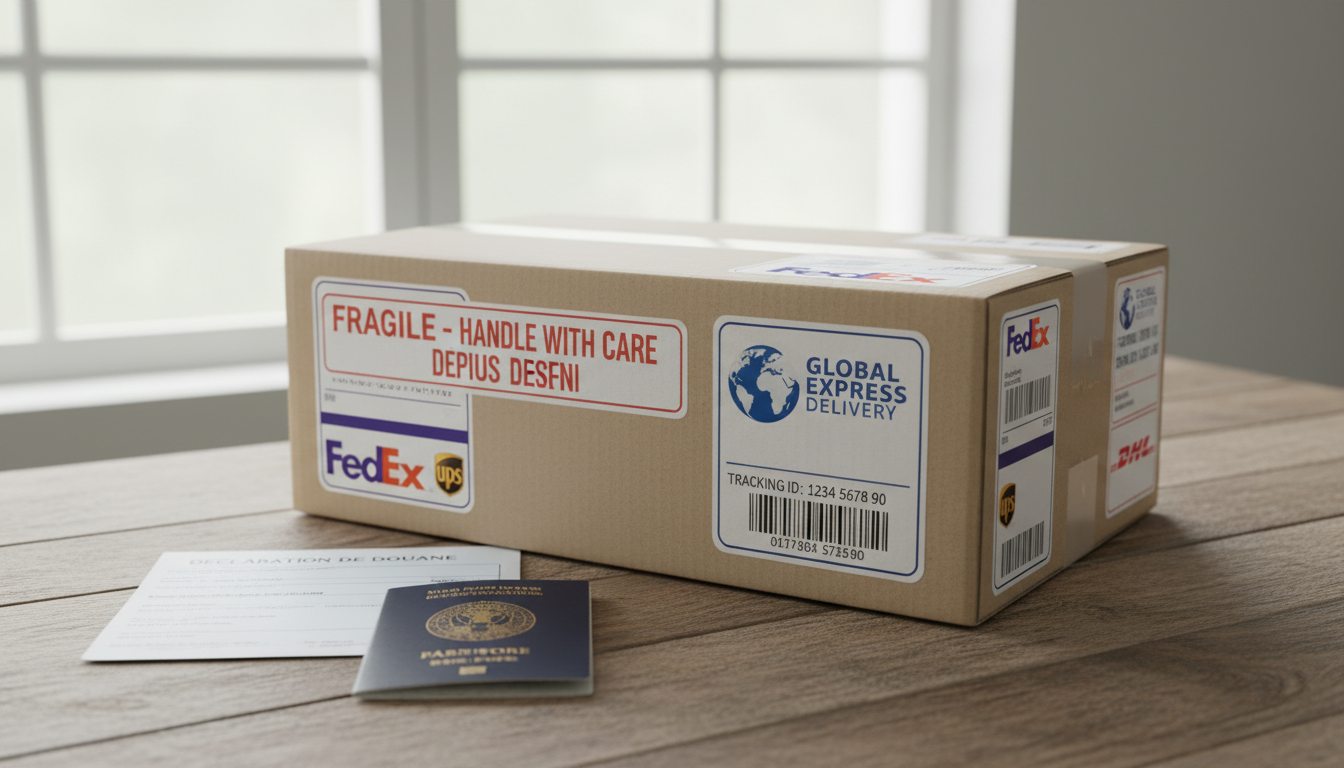
The direct financial hit of a lost domestic shipment is manageable compared to the compounding expenses of international transit. When a package crosses borders, it is handled by a chain of entities, including customs agents and varied local carriers, each introducing a new point of failure. These complexities, combined with significantly longer transit times, push the standard loss and damage rate well beyond the 1 to 1.5 percent baseline often seen in domestic logistics.
For a global merchant, the cost of uninsured packages extends to non-recoverable expenses that carriers rarely reimburse. If a shipment is lost or rejected, you lose the initial shipping fee and the non-refundable customs duties and taxes paid to clear the border. In some jurisdictions, administrative errors or local carrier failures can even lead to potential fines. In cases of damage, many carriers require the physical item to be returned to verify the claim; however, the return shipping fees for an international parcel can often exceed the original cost of the item itself. This creates a scenario where it is more expensive to prove the loss than the loss is worth. Utilizing discounted package insurance provides a critical safety net for these global variables. By securing coverage that accounts for the full landed cost, businesses ensure that an expedited claims process can recover the total investment, including those sunk duties and fees, rather than just a fraction of the product value.
Modern Solutions: Streamlining Claims with API and Tech Innovation

The complexity of cross-border logistics and the high stakes of customer retention underscore the need for a sophisticated recovery system. To mitigate the total cost of uninsured packages, businesses must move beyond manual claim filing and embrace automated, tech-driven solutions. Modern shipping requires a digital-first approach where insurance is not an afterthought but an integrated component of the fulfillment workflow.
u-pic addresses these operational bottlenecks through custom API solutions that allow businesses to embed coverage directly into their existing shipping software. This integration removes the administrative burden of manually entering data for every shipment, reducing human error and the labor costs associated with risk management. With 24/7 online access, shippers can manage their portfolios and file claims at any time, eliminating the traditional wait for carrier business hours or call center availability.
Recovery speed is vital for maintaining cash flow. While standard carriers often drag out investigations for weeks, u-pic utilizes an expedited claims process designed for the pace of modern ecommerce. Once a claim is approved, payments are issued via ACH; this provides immediate liquidity so businesses can restock inventory and satisfy customers without waiting on a physical check to arrive by mail. By leveraging discounted package insurance and a tech-forward infrastructure, companies can transform a chaotic loss into a manageable, automated line item. This level of efficiency, supported by over 35 years of industry experience and San Jose based innovation, ensures that a single lost package does not cascade into a long term financial or operational crisis.
While a single lost package might seem like a minor setback, the long term costs to your reputation and bottom line are substantial. Protecting your business requires a proactive strategy that looks beyond the immediate loss. If you want expert help streamlining your protection and minimizing financial risks, our team is here to support you. You can explore our services to find the right coverage for your unique shipping needs. Let us help you safeguard your shipments and maintain your peace of mind.